
01
Define
Turn the requirement into clear rules
A legal or compliance expert defines what to ask, which conditions apply, and what should happen. The visual builder keeps the reasoning readable.
A legal or compliance expert defines what to ask, which conditions apply, and what should happen. Your team reuses that work—and gets a versioned audit record every time.
A simple example
How it works
ProseID calls the reusable set of questions, conditions, and outcomes a schema. Create it once, publish a fixed version, then let people use it consistently.
Define
A legal or compliance expert defines what to ask, which conditions apply, and what should happen. The visual builder keeps the reasoning readable.
Publish
Publish a version that cannot be silently rewritten. When the law or interpretation changes, release a new version without changing earlier results.
Use
Run the rules as a form, guided assessment, determination, or checklist. Every completion records the answers, result, and exact version used.
One set of rules · four ways to use it
A Flow is the screen a person actually uses. The same published schema can power a form, guided assessment, calculated decision, or checklist without rebuilding the rules.
Collect the complete set of facts in one responsive document.
Reveal one relevant question at a time as earlier answers change the path.
Turn a known set of facts into a calculated, reviewable outcome.
Review explicit controls and retain the completed check as auditable evidence.
What ProseID keeps track of
See who created the interpretation, which version was used, what answers were given, and why the result followed.
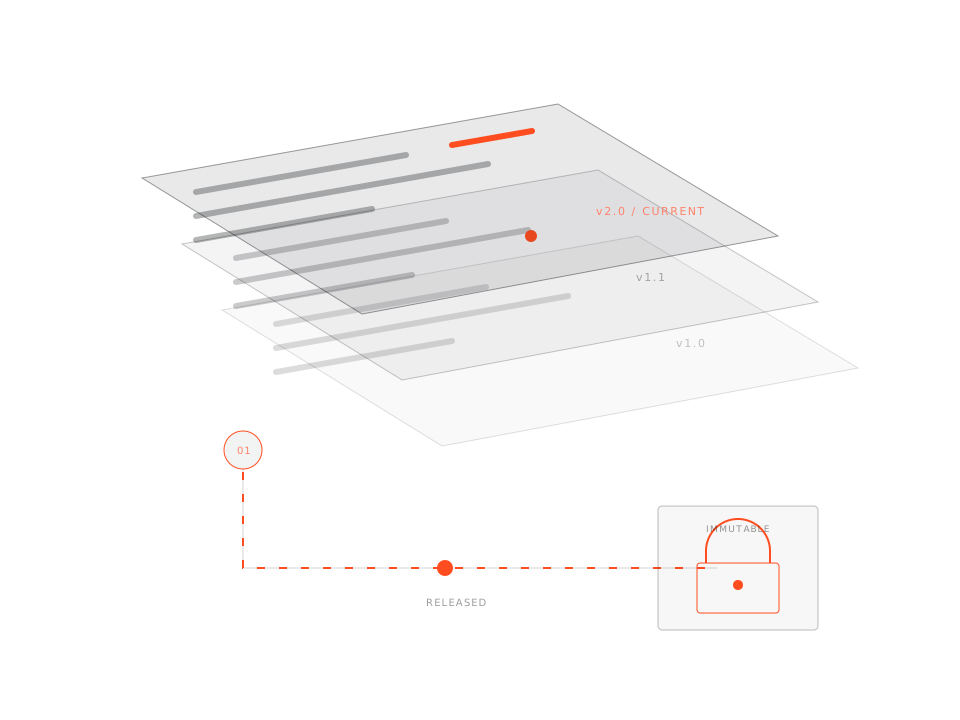
Published versions stay fixed, so every result remains tied to the interpretation that produced it.
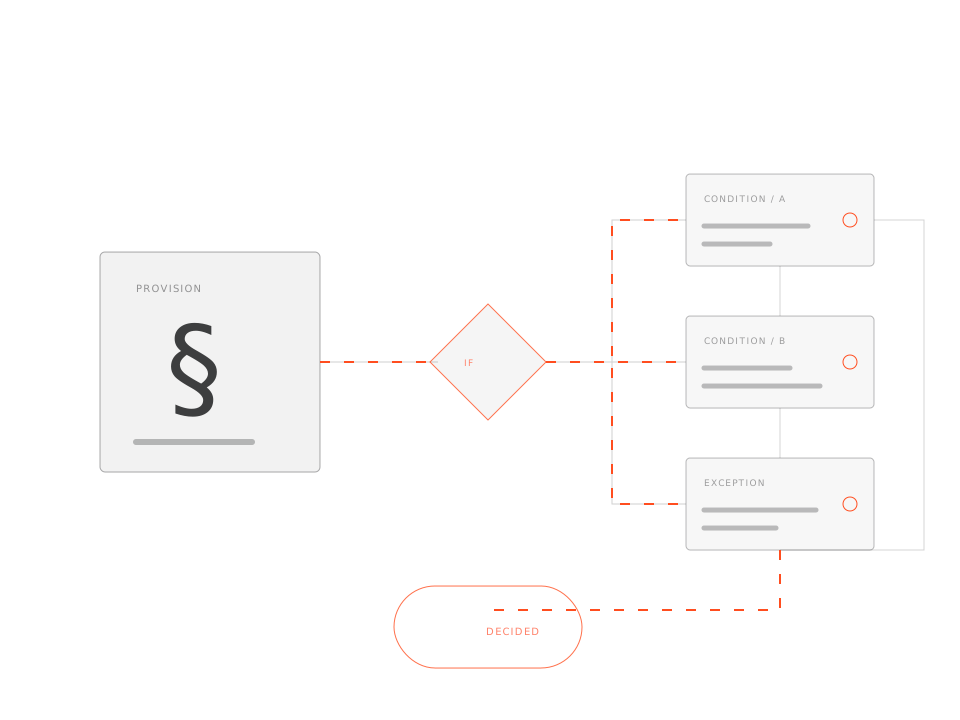
Questions, conditions, exceptions, and outcomes turn written requirements into a process people can follow.
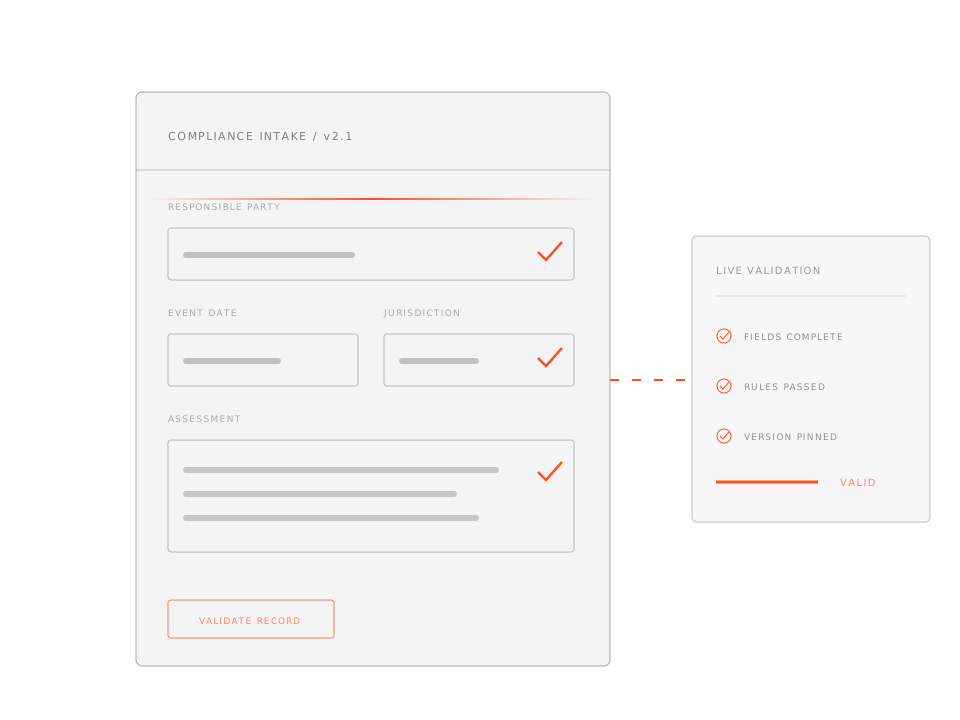
Use the same rules as a form, guided path, calculated outcome, or auditable checklist.
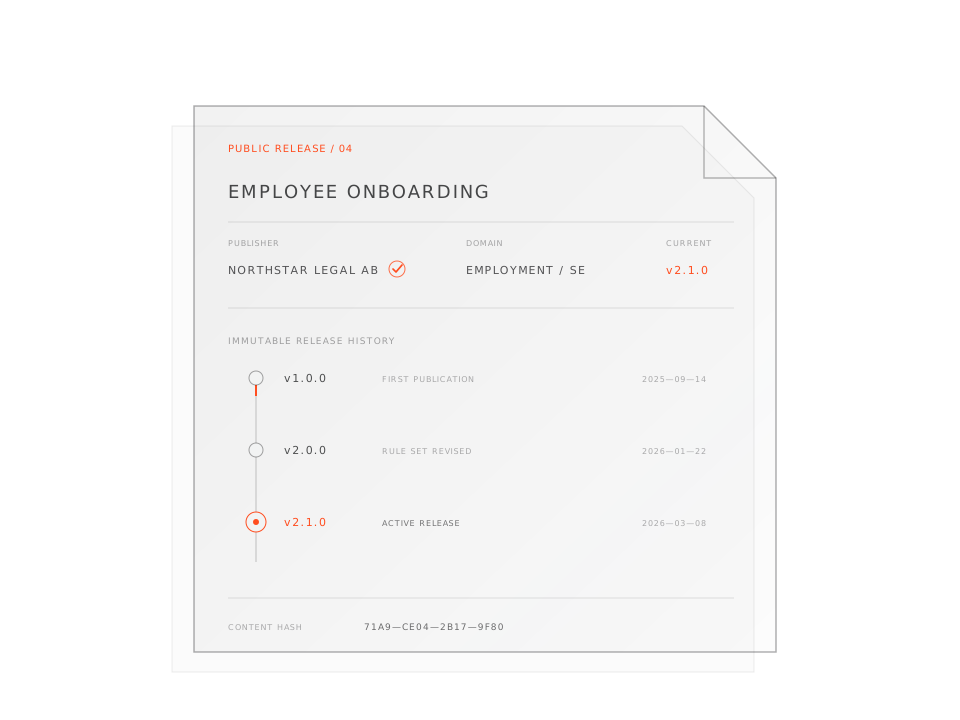
Every public version shows who published it, what changed, and which version a business has chosen to use.
See it in action
Build readable decision rules on the left. See the questions, outcome, and validation on the right.
When risk_level is high
Require enhanced_review is complete
When owner_verified is no
Require onboarding is paused
Answer the facts used to decide the required level of review.
One connected system
Questions, conditions, and validation stay in one readable workspace. The visual builder and JSON editor always describe the same interpretation.
A workflow can follow the latest release or stay attached to an exact version. Published versions never change.
Present one published version as a form, guided assessment, determination, or checklist without rebuilding its rules.
Find published interpretations, see who created them, and adopt a specific version instead of beginning again from legal prose.
Public registry
Legal and compliance experts can publish reusable interpretations. See who created them, inspect what changed, and choose the exact version your workflow will use. Verified publishers can optionally earn when another business completes a Flow built from their work.
Explore published interpretations ↗Simple usage pricing
A completed form, assessment, determination, or checklist uses one credit when it creates its audit record. Unfinished attempts cost nothing. A registry schema may carry a clearly shown publisher add-on.
Free
50 signup credits
Lite
100 monthly credits
Starter
250 monthly credits
Growth
1,000 monthly credits
No subscription required
Top-up credits never expire. Larger top-ups receive a volume bonus, shown before you buy.
Questions, answered
Legal requirements are written in prose. Businesses repeatedly turn that prose into questions, decision rules, forms, and checks—often rebuilding the same work. ProseID lets an expert create the interpretation once, publish it safely, and let other teams apply it consistently.
It is the reusable set of questions, conditions, outcomes, and checks behind a compliance process. ProseID keeps each published version fixed so later changes never rewrite earlier results.
A Flow is the experience a person actually uses. The same published rules can appear as a form, guided assessment, determination, or checklist without being rebuilt four different ways.
No. The respondent can add a basic typed-name electronic signature. ProseID hosts, validates, and records the ceremony but never presents itself as the signer.
A published version never changes. A new release can become the latest version, while earlier records remain tied to the version they actually used.
Only when it completes and creates a record. Starting or abandoning a Flow does not consume a credit.
Turn one requirement into something people can use.
Cookies & storage
Essential storage keeps you signed in and secure — it's always on. With your OK we'd also use analytics to see how the product is used and improve it; analytics only runs if you allow it. See our privacy policy.